




A mature swinger can start safely after 50 by agreeing on boundaries, checking sexual-health needs, choosing an accessible social event, and setting a slow pace with a clear stop rule. Age does not prevent consensual exploration, but menopause, medication, mobility, privacy, and STI testing deserve direct planning before a couple attends an event.
Key Takeaways
- Mature swingers over 50 can explore consensual experiences safely by focusing on communication, boundaries, health, and mutual comfort.
- Clear agreements should come before any event, including personal limits, stop signals, expectations, privacy rules, and relationship boundaries.
- Health preparation matters, including STI testing, medication considerations, menopause-related comfort, and physical readiness.
- Choosing the right event is important — prioritize venues with strong consent policies, accessibility, privacy protections, and a low-pressure environment.
- Successful experiences depend on ongoing communication — couples should discuss feelings afterward, adjust boundaries, and respect any decision to pause or stop.
What does “mature swinger” mean?
A mature swinger is usually an adult over 50 who takes part in consensual partner exchange or group social events with a spouse or partner. The label describes age and participation, not a fixed body type, role, sexual orientation, or level of experience.
Search intent is split between explicit media and real-life guidance. Semrush recorded 320 US monthly searches for “mature swinger,” 320 for “mature swinger wife,” and 260 for “swinging mature wives” on July 20, 2026. In my July 22 review, 7 of the first 10 age-focused results led to explicit search or video pages, leaving basic health and consent questions unanswered.
Mature swinging also differs from hotwifing. Swinging usually permits reciprocal activity for both partners, while a hotwife agreement centers the woman’s outside partners and her primary partner’s chosen role. Read mature hotwife versus MILF definitions for age and identity terms, then compare structures in swinging, polyamory, and hotwifing.
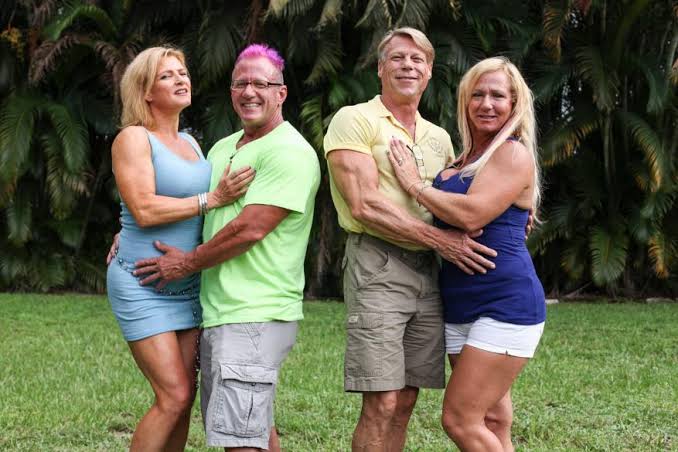
Direct answer: A mature swinger is generally a person over 50 who joins consensual partner exchange, but the agreement can be social, soft-swap, full-swap, or observation-only.
Are people over 50 still sexually active?
Yes, many people remain sexually active well past 50. The University of Michigan National Poll on Healthy Aging reported in 2018 that 40% of US adults ages 65–80 were sexually active, while 54% said sex was important to their quality of life.
Activity varied by age in that poll: 46% of people ages 65–70, 39% of those 71–75, and 25% of those 76–80 reported sexual activity. The results describe the wider older population, not swingers, but they counter the false idea that sexual interest has a fixed expiration date.
Health status matters more than a birthday alone. The poll found 73% of sexually active respondents were satisfied with their sex life. Couples should still define success for themselves; attending a social event, dancing, talking, or watching may be a complete evening without partner exchange.
Our Hotwifing After 40 guide covers the related value of clear pacing and established communication in hotwife relationships.
Direct answer: National polling shows that 40% of adults ages 65–80 remain sexually active, so exploration after 50 is common enough to deserve accurate guidance.
How should mature swingers start after 50?
Start with a conversation, not an event booking. Each partner should separately describe interests, limits, health needs, privacy concerns, and the conditions that would make them stop.

Use this six-step plan:
- Name the goal. Decide if the first aim is conversation, watching, flirting, or sexual contact.
- List three firm limits. Include acts, people, substances, privacy, and overnight stays.
- Choose a signal. One word or gesture ends the interaction without explanation.
- Check health needs. Review medications, pain, sleep, mobility, condoms, dental dams, and STI testing.
- Pick a low-pressure venue. Select a social mixer or club with seating, lockers, clear rules, and accessible exits.
- Schedule a review. Talk the next morning and again after 72 hours before making another plan.
The 72-hour review is my editorial protocol based on covering couples who process excitement and discomfort at different speeds. It is not a clinical rule. A same-night talk can cover immediate care; the later review catches feelings that appeared after sleep, work, or renewed contact from other guests.
New couples can pair this plan with what to expect at a first swinger club and 15 swinger party etiquette rules.
Direct answer: Mature swingers should begin with a six-step agreement covering goals, limits, stop signals, health, venue choice, and a 72-hour review.
What health checks matter before a swinger event?
The key checks are STI screening, barrier use, vaccination status, medication effects, pain or dryness, cardiovascular limits, and any condition that affects balance or alertness. A clinician should answer personal medical questions because a general article cannot set an individual’s testing schedule or declare someone fit for sexual activity.
CDC’s 2024 STI surveillance, published in 2026, counted more than 2.2 million reported cases of chlamydia, gonorrhea, and syphilis in the United States. The total was 13% higher than a decade earlier. Those figures cover all reported ages and do not measure swingers, yet they show why “we are older” is not a prevention plan.
Before an event, each partner can ask a clinician:
- Which STI tests fit my anatomy, partners, and planned activities?
- When should testing occur after a new exposure?
- Are hepatitis A, hepatitis B, HPV, mpox, or other vaccines relevant to me?
- Do my prescriptions affect blood pressure, alertness, erections, lubrication, or alcohol tolerance?
- Is pain during sex a reason for assessment before trying a new activity?
CDC screening recommendations, current on its 2021 treatment-guideline page, vary by anatomy, pregnancy, age, and risk. Testing must also match exposure site; a urine test alone may not answer every oral or rectal exposure question.
Direct answer: Mature swingers need risk-based STI care and a medication-and-comfort review, not assumptions based on age or relationship length.
How can menopause affect mature swinging?
Menopause may change vaginal tissue, lubrication, comfort, sleep, temperature regulation, or desire, but it does not define a woman’s interest or consent. The Menopause Society explains on its sexual-health page that falling estrogen can cause dryness and thinner vaginal tissue, which can make penetration painful.
Pain is a stop signal, not an obstacle to push through. Pack a compatible lubricant, allow more time for arousal, choose nonpenetrative options, and talk with a qualified clinician about persistent dryness, bleeding, urinary symptoms, or pain.
A 2025 Menopause Society conference source estimated that 50%–70% of perimenopausal and postmenopausal women experience sexual dysfunction involving concerns such as dryness or painful sex. That wide range reflects different populations and definitions; it should not be used to predict one person’s experience.
Consent remains specific at every stage. Agreeing to attend, flirt, or watch never means agreeing to penetration. A partner who changes her mind has used the agreement correctly.
Direct answer: Menopause can affect comfort and tissue health, so mature swinging plans should include lubricant, nonpenetrative options, and medical care for persistent symptoms.
How do you choose an age-friendly swinger club or event?
Choose a venue that states its consent rules, dress code, accessibility, smoking policy, alcohol policy, membership checks, and reporting route before you pay. Call or email if the website does not explain stairs, seating, parking, room temperature, or private changing space.
Score each venue from 0 to 2 on the five items below. My 10-point venue check is an original editorial tool, not an industry certification.
A score below 8 of 10 means I would keep searching or attend only a nonsexual public social. No score removes interpersonal risk, but the exercise forces a couple to check the features that glossy event photos omit.
Compare venues with the best swinger resorts for couples and use the best swinger apps for couples only after reading current privacy settings.
Direct answer: An age-friendly event earns at least 8 of 10 on consent, access, privacy, health support, and exit control.
How can mature couples manage energy, mobility, and medication?
Plan the event around the lower-energy partner’s comfort, not the venue’s closing time. Choose seating, take breaks, bring needed medication in its labeled container, and maintain independent transport so either partner can leave.
Avoid changing prescription timing to fit an event without medical advice. Alcohol can interact with many medicines and can reduce balance, alertness, and clear consent. Set a drink limit before arrival or choose no alcohol for the first event.
Use a three-color check during the evening:
- Green: Comfortable, alert, and interested.
- Yellow: Pause for water, food, medication, privacy, or a couple conversation.
- Red: Leave now; no debate and no blame.
The colors are communication shortcuts, not medical assessments. Chest pain, severe shortness of breath, fainting, or sudden neurological symptoms require emergency help under local guidance, not a private couple check.
Direct answer: Mature couples should follow the lower-energy partner’s pace and use green, yellow, or red check-ins with independent transport available.
How should mature swingers protect privacy?
Use separate lifestyle contact details, avoid workplace or family identifiers, and agree before anyone takes a photo. Many people over 50 have long professional histories, adult children, community roles, or public records that make a small clue easy to connect.
Do not reuse a username or profile photo from Facebook, LinkedIn, Instagram, or a business page. Turn off precise location access unless the service needs it at that moment, and review what nonmembers can see.
For online matching, follow swinger dating profile verification before sharing a phone number or hotel. The FTC reported in April 2026 that social-media scams produced $2.1 billion in reported 2025 losses, so money requests and sudden emergencies should end contact.
Direct answer: Privacy after 50 requires separate contact details, unique images and usernames, limited location sharing, and joint approval for every photo.
What should happen after the first event?
The first review should cover physical comfort, emotional response, boundary changes, third-party contact, and whether either person wants a pause. Do not use the drive home for a forced verdict if one partner is tired or overstimulated.
Ask five questions the next day:
- What felt better than expected?
- What felt uncomfortable or unclear?
- Did either of us agree to something under social pressure?
- Is any physical symptom or STI follow-up needed?
- Do we want another event, a slower format, or a full pause?
No answer is failure. Observation-only attendance can confirm interest, reveal a mismatch, or show that another form of consensual non-monogamy fits better. Cuckold aftercare principles also apply to reassurance and boundary review after swinging.

Direct answer: Review comfort, consent, health, contact, and future pace the next day, then allow 72 hours before booking again.
What do mature swingers ask most often?
1. Is 50 too old to start swinging?
No. The University of Michigan reported in 2018 that 40% of adults ages 65–80 were sexually active. Readiness depends on mutual consent, health, privacy, and pace rather than age alone, and a first event can remain fully social.
2. Is a mature swinger wife the same as a mature hotwife?
No. A mature swinger wife usually participates in reciprocal couple-based exchange, while a mature hotwife has outside partners under the couple’s chosen agreement. Some people use both labels, but partners should define permissions rather than rely on a label.
3. How often should mature swingers test for STIs?
There is no single schedule for every couple. CDC guidance varies by anatomy, partners, planned activities, symptoms, and exposure site. Discuss the plan with a clinician before a new partner, and ask when each test becomes reliable after an exposure.
4. Can one partner attend only to watch?
Yes, if the venue permits observers and both partners agree. Watching does not create consent for later contact. State the limit before arrival, repeat it to anyone who approaches, and leave if staff or guests pressure either person.
5. What if one partner wants to stop after the first event?
Stop and treat the decision as valid. Do not bargain for one more event or use money already spent as pressure. Review what happened after rest, and seek a sex-positive relationship therapist if the disagreement remains painful.
What is the best first step for a mature swinger?
The best first step is a private six-part agreement followed by an observation-friendly event that scores well on consent, access, privacy, health, and exit control. Browse the Hotwife.live swinging guides for venue and etiquette context, then make the pace fit both partners rather than a label.
Direct answer: Start after 50 with a clear agreement, health planning, and a low-pressure event where either partner can stop without penalty.